• Welcome to Jetboaters.net!

    We are delighted you have found your way to the best Jet Boaters Forum on the internet! Please consider Signing Up so that you can enjoy all the features and offers on the forum. We have members with boats from all the major manufacturers including Yamaha, Seadoo, Scarab and Chaparral. We don't email you SPAM, and the site is totally non-commercial. So what's to lose? IT IS FREE!

    Membership allows you to ask questions (no matter how mundane), meet up with other jet boaters, see full images (not just thumbnails), browse the member map and qualifies you for members only discounts offered by vendors who run specials for our members only! (It also gets rid of this banner!)

    free hit counter

New to Me 2005 SX230 HO

MTN2lake

Member
Messages
5
Reaction score
7
Points
22
Boat Make
Yamaha
Year
2005
Boat Model
SX
Boat Length
23
Hello all!

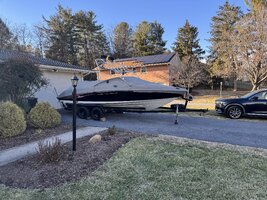
Long time lurker, first time poster. Bought my first boat this week; a one owner 2005 SX230 HO with 280 hours on it. Garage kept and impeccably maintained; the previous owner had a 3 ring binder “log” of every bit of maintenance he ever did on it, including annual oil changes, rebuilding the clean out plugs, etc.

I’ve been reading up on boats and the wife and I settled on a Yamaha Jet Boat primarily due to the reliability of the MR1 engines, the general good regard for the platform, and the deal we got on this particular boat. We have two kids under 4 so this was a family investment. We’ve been renting boats for the last couple summers (mostly pontoons) and wanted to go ahead and pull the trigger.

We took the boat out for a water trial with the previous owner and it performed beautifully, we also got a lesson in checking the plugs and the owner had them out and did not reinstall them before we were on the water. He showed us his protocol for loading and unloading and we plan to go to a local boat ramp in the early spring and load and unload 5-7 times with a checklist to get the procedure down with no pressure. The prior owner even helped us winterize the motors before we drove away.

Then, of course, the SNAFUs began. 40+ mph wind gusts on the drive home pulled the stern cover off while driving and yanked 6-8 of the snaps out of the side of the boat not 20 mins after we pulled out. Worked it out on the side of the road, stowed the cover, and drove slowly home watching for flying cushions. Got home successfully, exhausted, covered everything up as best we could and went to bed.

I woke up the next morning and went out to look at the boat and noticed it was below freezing. I immediately panicked about water still in the boat, specifically in the clean outs and pulled both plugs. Water ran out, but I have no faith it did not freeze in the clean outs. I have visually inspected them extensively and do not see any cracks.

Here are my questions:

1) did I majorly screw up by leaving the water in the clean outs to possibly freeze? How can I tell before I put the boat back in the water?

2) it appears the solution to the pulled snaps is to remove the old rivet shanks, install repair fiberglass(bondo-type stuff, unclear on the exact name), and reinstall new snaps. I searched but could not find a thread on here discussing this issue, any feedback appreciated.

3) last owner installed a permanent trickle charge outlet in the side of the boat. Should I plug it in all winter?

4) I plan to test the batteries before use, but does anyone make a habit of carrying a charged jump box with them?

More questions to come, I am sure.

Thanks in advance!
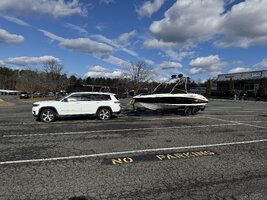
 
Welcome and congrats on the new boat. It looks beautiful. I don’t have any real cold weather experience to speak of, but I would think that if water flowed out of the cleanout plug area that it never froze in the first place. Second, in the winter, I’d pull the batteries and charge them in the garage where they’ll be kept at warmer temps. But that’s just my opinion. Also, I only trailer my boat while covered with the trailer cover. If you chose to do it this way, I would recommend buying four seat belt shoulder strap pads to put over the buckles that enable the cover to go around the tower legs. Keeping the boat covered this way prevents anything from getting sucked out. Just make sure to remove or at least lower the anti pooling poles before driving.
 
I wouldn't worry about one night of freezing temps unless its blistering cold. If it just got to below freezing for a little bit and then back above you're fine, especially if the water wasn't already frozen. If the clean out plugs go in and out and you don't see any noticeable damage you are good. Always, always pull the cleanout plugs after you are out of the water, this keeps them in better shape and prevents them getting stuck if you don't take them out regularly.

Also I assume the previous owner told you to do this, but it is always good to let the engines run out of the water to help dry the cooling system. They are self draining but water can still get stuck in the water boxes (AKA Mufflers) and it could possibly freeze and cause damage (I wouldn't worry about it in your case this time if you didn't do this). I have never winterized with antifreeze up here in Iowa, just let the engines run, throttled up a bit to blow any excess water out and called it good. Also fogged the cylinders/intake and changed the oil every winterzation. If you don't plan on boating for awhile I would take pics of how the batteries are hooked up, pull them, and keep them in your basement or somewhere inside and trickle charge them once or twice a month.

That sucks about the wind, I would call a fabric shop or a local boat dealer to ask how they proceed about repairing the snaps just to be sure.

I carry a small jump box on me for long lake trips, thankfully I have never had an issue with our AR230 and now 252SE. These engines don't take a ton of juice to start since they are jet ski engines, but properly maintaining the batteries year round is key. It's good the previous owner already has a maintainer installed, as most of us do and always plug it in after we use the boat.

One thing to note, on your year of boat the ECU boxes could possibly get moisture in them, I believe from water leaking on them from the engine hatch design. I would take some flex seal spray and spray the top side of the ECU boxes just for good measure.


Congrats on the new purchase, we loved our AR230, it was extremely good to us and super reliable. We chose a Yamaha over another I/O only because of our young kids and it is so nice not having to worry about the prop! If I hadn't found this forum years ago I may have not chose Yamaha, but as you see this forum is very active and willing to help!
 
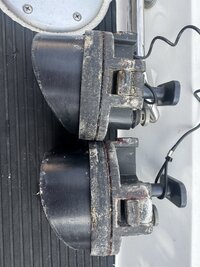
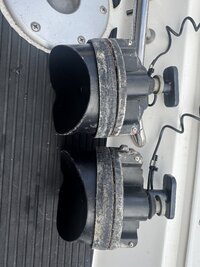
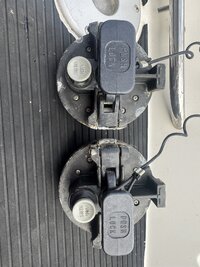
can you post some pictures of the clean out plugs
 
I wouldn't worry about one night of freezing temps unless its blistering cold. If it just got to below freezing for a little bit and then back above you're fine, especially if the water wasn't already frozen. If the clean out plugs go in and out and you don't see any noticeable damage you are good. Always, always pull the cleanout plugs after you are out of the water, this keeps them in better shape and prevents them getting stuck if you don't take them out regularly.

Also I assume the previous owner told you to do this, but it is always good to let the engines run out of the water to help dry the cooling system. They are self draining but water can still get stuck in the water boxes (AKA Mufflers) and it could possibly freeze and cause damage (I wouldn't worry about it in your case this time if you didn't do this). I have never winterized with antifreeze up here in Iowa, just let the engines run, throttled up a bit to blow any excess water out and called it good. Also fogged the cylinders/intake and changed the oil every winterzation. If you don't plan on boating for awhile I would take pics of how the batteries are hooked up, pull them, and keep them in your basement or somewhere inside and trickle charge them once or twice a month.

That sucks about the wind, I would call a fabric shop or a local boat dealer to ask how they proceed about repairing the snaps just to be sure.

I carry a small jump box on me for long lake trips, thankfully I have never had an issue with our AR230 and now 252SE. These engines don't take a ton of juice to start since they are jet ski engines, but properly maintaining the batteries year round is key. It's good the previous owner already has a maintainer installed, as most of us do and always plug it in after we use the boat.

One thing to note, on your year of boat the ECU boxes could possibly get moisture in them, I believe from water leaking on them from the engine hatch design. I would take some flex seal spray and spray the top side of the ECU boxes just for good measure.


Congrats on the new purchase, we loved our AR230, it was extremely good to us and super reliable. We chose a Yamaha over another I/O only because of our young kids and it is so nice not having to worry about the prop! If I hadn't found this forum years ago I may have not chose Yamaha, but as you see this forum is very active and willing to help!

Thank you! Re: Winterization:

It looks the procedure you describe (connect water, flush, turn off water, and then throttle engine up and down repeatedly for 10-15 seconds) is the long term storage recommendation in the owner's manual on page 4-3. The prior owner advised me his winterization procedure was to connect a hand pump to the water connection and pump in RV anti-freeze until the anti-freeze was observable coming out the jets. This is what we did when we took it out of the water after our test run, and how the boat sits now.

Hadn't considering pulling the batteries- I have a trickle charge setup for my lawn equipment batteries that would be easy to add them to.

Stupid question time: if these boats are "self draining" (as I have read online, but do not see referred to in the owners manual), didn't all that anti-freeze I pumped in run out when I drove away with it? What's the purpose of putting the anti-freeze in? Looking at a diagram of the jets is not super helpful.

I wish the damage was limited to the cover; it pulled the snaps off the side of the boat so I am looking at fiberglass repair.

I'll take a look at the ECU boxes, given the level of care and modifications done by the prior owner I'd be surprised if something like that hadn't already been done.

Yeah, the lack of prop was a big factor for us as well, plus lurking extensively on this forum.
 
Welcome and congrats on the new boat. It looks beautiful. I don’t have any real cold weather experience to speak of, but I would think that if water flowed out of the cleanout plug area that it never froze in the first place. Second, in the winter, I’d pull the batteries and charge them in the garage where they’ll be kept at warmer temps. But that’s just my opinion. Also, I only trailer my boat while covered with the trailer cover. If you chose to do it this way, I would recommend buying four seat belt shoulder strap pads to put over the buckles that enable the cover to go around the tower legs. Keeping the boat covered this way prevents anything from getting sucked out. Just make sure to remove or at least lower the anti pooling poles before driving.
Thank you!

Yeah, I learned the hard way the difference between a mooring cover and a trailering cover. Guess I'm learning fiberglass repair! Noted on the pads, hadn't thought about that; may need to look at where the buckles are on the side of the boat and see if it needs some padding to keep it from rubbing.
 
I would store your cleanout plugs inside over the winter. Those plugs can get full of water during the summer and they don't drain out unless you open them. At least the ones I had always filled with water.
 
One thing you may want to do is to remove the bilge plug on the transom. Park it on a flat area, not on a sloping driveway with the stern higher than the bow. Jack the front of the trailer all the way up, on a block of wood, I used a 4x4 under the wheel. This will drain all the water from bilge. The lowest part of the bilge that holds the most water is under the floor ski locker compartment. Jacking it up high will make any remaining water run back to the bilge drain. To see if it is high enough, you can put a level on the keel on the bottom of the boat and check the bubble to make sure it is pitched to drain. If you look into the ski locker drain with a light, do you see water or ice? After the water drains out, you can take it off the block of wood and cover it up to prevent rainwater and melting snow from getting in.

This is 9yo and I now know how and where water sits in the bilge and how to remove it. Learning how the bilge plugs work in the engine compartment and why the bilge pump is mounted over a hole in the 3rd bay of the engine compartment with plugs in the other two. There can be water in the bilge that the pump can not reach. Many add another bilge pump lower in the bilge to get that water. Jacking the trailer all the way up and then some and removing the transom plug gets it all out.
 
Last edited:
Thank you! Re: Winterization:

It looks the procedure you describe (connect water, flush, turn off water, and then throttle engine up and down repeatedly for 10-15 seconds) is the long term storage recommendation in the owner's manual on page 4-3. The prior owner advised me his winterization procedure was to connect a hand pump to the water connection and pump in RV anti-freeze until the anti-freeze was observable coming out the jets. This is what we did when we took it out of the water after our test run, and how the boat sits now.

Stupid question time: if these boats are "self draining" (as I have read online, but do not see referred to in the owners manual), didn't all that anti-freeze I pumped in run out when I drove away with it? What's the purpose of putting the anti-freeze in? Looking at a diagram of the jets is not super helpful.
In the owners manual I don’t believe it says anything about winterizing/long term storage prep with antifreeze…but I could be wrong.. What you read about long term storage basically means this: When you remove the water after flushing and you leave the engine on and give it throttle you are blowing out the water box and drying up smaller cooling passages due to heat from the engine. Any other amount of water that is left in the water boxes is not substantial enough to cause damage even if it freezes.

When you put antifreeze in it most of it is probably sitting in the water box, so not all of it ran out.

Now we won’t chastise you if you want to use antifreeze for sure, especially if it makes you sleep better at night lol. In the years I’ve owned a jet boat, which is over 5 now, I’ve never winterized with antifreeze. We’ve had some very chilly winters in Iowa those years too.

There is a video on here if you look in the FAQ section on how the water flows through the MR1 engines!!

That sucks on the fiberglass repair, I’d probably let a professional do it if it looks pretty extensive.

Also agree with Murf above, I take my clean-out plugs out & store them in the basement next to the batteries.
 
Thank you!

Yeah, I learned the hard way the difference between a mooring cover and a trailering cover. Guess I'm learning fiberglass repair! Noted on the pads, hadn't thought about that; may need to look at where the buckles are on the side of the boat and see if it needs some padding to keep it from rubbing.
One thing that I forgot to mention is that I use two LARGE pool noodles on the windshield under the cover while towing with the trailer cover. It prevents wear on the cover.
 
Clean those up and the metal ring in the tube , wax the seal with bees wax do not use any petrolium products and add a set of EZ locks to those to prevent them from blowing out during use.
Cobra EZ-Locks
Here are a couple videos for understanding the ezlocks
and
 
Get some plug locks for peace of mind; remove plugs after every outing so they don't even think about permanently mating; run a trickle charger to the boat after every outing and over the winter - there is no real need to remove battery(s); no need to run antifreeze I have learned it is overkill - I did it for several years when a newbie as you are; no need for a steering fin crutch these boats handle very well once you have some practice; if you run in salt water flush your engines every single time after the outing; just one 10 year plus owner of a perfectly running 2008 bought new in 2011 SX230 that doesn't get out as much as it should anymore. Any buyers out there lol? Anyway, I'm sure you will receive many more tips in this thread.
 
Oh as for steering when you take the boat on the water you will quickly hate it's slow speed handling or lack there of, you will hate the bow wander on plane and the total loss of control if you rapidly decelerate in a turn . You can add the COBRA super ultimate steering for $399.99 and you will own a new boat as soon as you drive it with the steering you will be very happy and others can also drive with confidence . Plus feel like a pro.
 
Back
Top