I’ve struggled with my boats power as I’m at 5000’ of elevation, and on the hottest summer days the density altitude is around 10,000’ so I’m losing roughly 30% of my hp. On the hottest days my boat would only turn 6700 rpm and do 29 mph. I’ve tested three brands of impellers, and different pitches to try and find the best all around impeller. I’m currently running the OEM impellers pitched by Dave at Leading Edge for high altitude, 7300 rpm (my engines are rated 8000) at 5000’, 7500 rpm at 3200’, and 7800-7900 at 1250’. When I was at 650’ on Lake Michigan I was on the rev limiters, 8000+ rpm, but, I had a lot of reserve power so my boat was a rocket relatively speaking, the speed bleed off was very minimal it would drive through turns and push you into the deck, and top speed was unaffected because top speed is directly proportional to the amount of water being pushed out of the jet pumps.
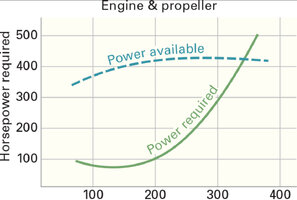
Think of this exercise like a graph with two points on it, one line is available engine power, the other is jet pump demand power. At lower rpm the gap between available engine power and jet pump demand power is very large and so is the reserve power, as rpm increases this gap starts shrinking and the reserve power becomes less and less until the two points meet due to the increased propeller demand.
View attachment 245864
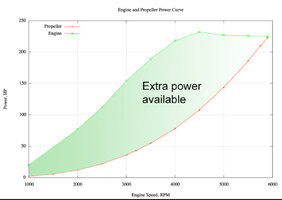
Or this graph from Boston Whaler which denotes “extra power available” or reserve power.
View attachment 245863
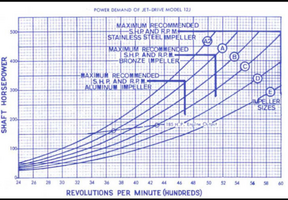
As you can see from this Berkeley Jet power demand, increasing the rpm by 1000 rpm from 4000 to 5000 rpm roughly doubles the hp required.
View attachment 245865
So, the key is to make sure the engine rpms will be at rated rpm at WOT where the engine makes the most power which is usually the max rated rpm since that is where the most air flow is, thus the most fuel can be burned. Then balance the load, via the pitch of the impeller to a point where it is just below the max power of the engine so there is enough reserve power for any given atmospheric conditions / density altitude within the time period of use to maintain peak performance for maximum enjoyment of your boat.
On cold days you might be a bit under propped meaning a bit more reserve power, and on hot days the reserve power will be low, but even on hot days the engines performance will still be perky and accelerate strong up to its top speed. If the boat is propped so that there is little reserve power on cold days then on hot days it will feel sluggish and lazy and the rpms will not top out. Is there a penalty for spinning the engine faster ? Yes, you’ll burn a bit more fuel, but the performance gain is well worth it, my mpg dropped .3 mpg but the speed of my boat increased from 29 to 35-37 mph.
Again, assuming everything is good with your engine, getting the impeller sorted out will make a huge difference in performance on your boat. I’m basing this off of your 6700 rpm experience, just getting the pitch corrected to get your rpm’s up to 7500 will liven things up dramatically. Your boat doesn’t have any reserve power at this point as it is maxed out and only able to achieve 6700 rpm, once the pitch is corrected to allow full rpm you will probably pick up
some speed, but when turning at speed the speed will not fall off as badly.