• Welcome to Jetboaters.net!

    We are delighted you have found your way to the best Jet Boaters Forum on the internet! Please consider Signing Up so that you can enjoy all the features and offers on the forum. We have members with boats from all the major manufacturers including Yamaha, Seadoo, Scarab and Chaparral. We don't email you SPAM, and the site is totally non-commercial. So what's to lose? IT IS FREE!

    Membership allows you to ask questions (no matter how mundane), meet up with other jet boaters, see full images (not just thumbnails), browse the member map and qualifies you for members only discounts offered by vendors who run specials for our members only! (It also gets rid of this banner!)

    free hit counter

2021 AR210 is slowwww

PNWYamaha

Member
Messages
5
Reaction score
7
Points
12
Boat Make
Yamaha
Year
2021
Boat Model
AR
Boat Length
21
Hey guys new to the forum, and I found an older thread but nothing new and was hoping to get your opinions.

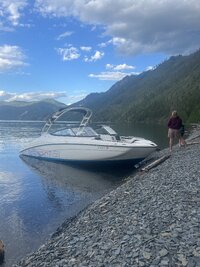
Just picked up a new to me 21 AR210 and took her for spin tonight. Shoots out of the hole, comfortable, handles great despite all my research saying I need a cobra jet or other steering helper.

My problem is it’s kinda slow, I wasn’t expecting anything crazy but topping out at 35 seems like I’m missing something. Lake was pretty much glass, no wind. Just me and wife and two young boys and none of us are on the bigger side.

The boat had perfect pass already installed and that has its own gps speedo so speed is confirmed on 34-35 mph.

I’m gonna put new plugs and air filters in, and I read about guys cleaning the hull, so maybe I shot myself in the foot because I did install a keel guard one of the rubber guards that sticks on since the boats primary use is landing on rocky beaches.

But if you have a 21 AR210 I’d love to get your top speed and any ideas for why it’s such a dog.
 

Attachments

  • IMG_0266.jpeg
    IMG_0266.jpeg
    2 MB · Views: 15
Adding your location to your profile will help us narrow down some things that may be specific to your boat, but going off your screen name, it seems like there might be some emissions-related things that could account for the low speed you're experiencing. To backtrack just a bit though:

You do not "need" any steering enhancement add-on. I say this WITH having Thrust Vectors on mine. Opinions abound - you feel comfortable without them at this time. There's plenty of other things we'll help you spend your money on, this doesn't sound like a "need" for you, nor should this be considered a "need", no matter how much stock people put into the sales pitch for them.

You're gonna put new plugs and air filters in - have you checked to see if they're needed? If your air filters don't have any oil on them, and aren't dirty, why replace something that's not going to get you a mythical boost of speed? Same with the plugs.

Cleaning the hull isn't going to get you 5mph, likewise, adding a keel guard isn't going to strip 5mph off your speed, unless it's installed SO poorly, you'd have to be blind to not notice it's been done wrong. These aren't the droids you're looking for.

There's LOTS of info to sift through - it would seem you've hit on "performance" threads of info, rather than "basics". There's LOTS of info that may or may not be pertinent to the discussion of your missing speed (such as the emissions I mentioned above). Walk through some of this with us - others will be along to help out or offer suggestions as well - some of it may be good, some bad, some neutral

The primary question to answer is this - "slowwww" is relative, and tells very little. Quantify it. What are you expecting your speed to be? There may be no solution out there for you, depending on that answer. If your hope is that you'll be able to do 55 in the conditions you mention, it's not gonna happen. The level of fuel and everything else that's added to the boat will add up, and no matter how big/small/short/tall the people are on the boat, their movement and mere presence are a drag on speed, in addition to many underestimating the additional weight they're carrying, and its effect on the speed of their boat.

So...

What's the oil level of each engine?

Sounds like you've read some stuff about the boat, but you didn't mention the oil level. On these engines, that can be one of the biggest killers of speed, so check that and let us know what the results are. While I'm at it - do you know how to check the oil - this will be in the manual, and it's similar, but NOT necessarily the same as checking the oil in a car. If you don't have a manual that lays this out, download it and follow the method laid out in that manual. Mine states to check it after the engines have warmed for 5 minutes or so ON THE WATER, not on the trailer, and I've had one of my engines overfilled - by the DEALERSHIP - that robbed me of some speed.

Those things you were looking to swap out - what's the condition of the plugs and/or air filter?

There's plenty of things to find to gain a "magic" boost, but checking the basics seem to have the greatest effect on these things, and the second in line is to acknowledge what your expectations are for "fasttttttt", to suss out whether those expectations need to be modified. Riva and plenty of other vendors are willing to take your money in the pursuit of unrealistic expectations, but you're right, 35 is not where that boat should be, but I wouldn't call it slow, either.
 
since the boats primary use is landing on rocky beaches.

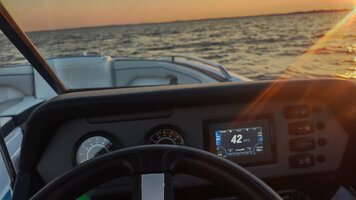
Your pic would seem to show less chance of a problem, if it continues to drop off like that shows, but you've got a giant vacuum cleaner hanging down under your boat - be mindful of that, as that's something that can end a day in a hurry
 
Whats your elevation, temp, humidity.
Top speed of that boat with light load and great conditions at sea level is 40ish. So you should have done some research prior. Those tr1s are not power houses. 120ish hp each.

When were the plugs last changed? Whats your max wot rpms? Oil level?
 
Heys guys thanks for jumping in! I guess I should have mentioned that I wasn’t expecting to break any records or be the fastest guy out there. When I researched these units it was estimated at 40-45 mph so I figured I’d be somewhere around there, so although it performed great the top end just left something to be desired.

I’m primarily 2000’ above see level so I’m sure that makes a difference. This was not purchased from a dealer and no service records were provided. So the basics like plugs, filters and oil change necessary or not just makes me feel better. When I checked oil it was on the low end but per the manual I didn’t run it for five minutes prior, so I will do that this weekend, I’ll also confirm WOT rpm.

And I didn’t mean to clown thrust vectors or any other addition, it was just that there was so many posts and topics about it guys were making it sound as if it was impossible to navigate with out them.
 
The number one thing for us to know is WFO rpm’s. The TR-1’s are rated at 8000 rpm at sea level.

The TR-1 engines are known to suffer rpm loss when over filled. Run the engines 6 mins and then immediately check the oil level, and be sure to screw the dip stick in fully when checking the oil. There’s a link in my signature about the proper oil level.

Air filters. Do not buy new ones yet. Next time out pull them out and run the boat and see if there is a difference in rpm. If they’re clean you’ll see a difference of about 150-200 rpm.

Spark plugs. Get a new set and gap them to .028” which is the minimum gap. .032” is the max. These engines eat plugs, get a new set and install them.

At 2000’ of elevation you will probably not hit max rpm of 8000 due to the higher elevation.

Get under the boat and check the impellers for damage.
 
The number one thing for us to know is WFO rpm’s. The TR-1’s are rated at 8000 rpm at sea level.


Just hit me, you're a good resource for him, boating at a higher elevation. What are your RPM's?


The TR-1 engines are known to suffer rpm loss when over filled. Run the engines 6 mins and then immediately check the oil level, and be sure to screw the dip stick in fully when checking the oil. There’s a link in my signature about the proper oil level.


Screwing in the dip stick is important, as @FSH 210 Sport notes. As I stated above, even my DEALERSHIP did a shite job with boat prep, and I had one engine overfilled when I got my boat.


Air filters. Do not buy new ones yet. Next time out pull them out and run the boat and see if there is a difference in rpm. If they’re clean you’ll see a difference of about 150-200 rpm.


Pay attention to the order of operations @FSH 210 Sport is laying these things out. Get a baseline of RPM's before doing this. Seems like a "duh" thing, but I've done plenty of "DUH! I'M A DOPE!" things, and sometimes we do things without it even registering, so this is a great reminder


Spark plugs. Get a new set and gap them to .028” which is the minimum gap. .032” is the max. These engines eat plugs, get a new set and install them.


DO NOT assume they're gapped properly, just because "oh, they say they're pre-gapped". CHECK THIS. Our boats of all years and models seem susceptible to spark plug related issues, best to start off correct. @FSH 210 Sport had a Proto or Stanley gap tester that was really slick, if you don't already have one, I'm sure he'll post a link.


Heys guys thanks for jumping in! I guess I should have mentioned that I wasn’t expecting to break any records or be the fastest guy out there. When I researched these units it was estimated at 40-45 mph so I figured I’d be somewhere around there, so although it performed great the top end just left something to be desired.

This is good info to know. More info is always better - we can separate the wheat from the chaff, and throw away the things that aren't needed, OR someone may spot something that's relevant that others may think is throwaway info. Oversharing, in this context, is a good thing, and having more info helps to develop a baseline for us, to help YOU.


I’m primarily 2000’ above see level so I’m sure that makes a difference. This was not purchased from a dealer and no service records were provided. So the basics like plugs, filters and oil change necessary or not just makes me feel better. When I checked oil it was on the low end but per the manual I didn’t run it for five minutes prior, so I will do that this weekend, I’ll also confirm WOT rpm.

Oil is an easy one to rationalize, but the other stuff may be hard to source, or even a waste of money if they're not needed yet. Best to save that money for fuel to use when having fun with the boat, not time sucks like maintenance 😁 Best to check them first, as your boat isn't going to be dead in the water, if these things were in reasonable shape in the first place, and some things, like the plugs, have been spotted cheaper at local places like O'Reilly's Auto Parts, if those need replacing. Amazon is getting to be a "check first, and shop for prices" for me, and in some cases that I discovered, they're actually a LOT higher priced than my local B&M.

And I didn’t mean to clown thrust vectors or any other addition, it was just that there was so many posts and topics about it guys were making it sound as if it was impossible to navigate with out them.

There's only one specific member here that gets truly butthurt about such things, but I'm not going to say Beetlejuice 3x. I get what you're saying - I just try to add to the info people have, and WITH a steering enhancement, I hope to steer people (HA!) away from throwing money at ANY of them UNTIL they're comfortable with the boat, and I wish more would temper their recommendations, but it's the internet, whaddayagonnado? 😁

My specific use case makes them super useful for me, about 20% of the time. For the other 80%, a big nothingburger. That 20% though, hooboy! I just tend not to go to that one restaurant on the water. It helps that they suck, so we don't stop there as often by boat. You already got a feel for life without them. If there's someone local to you that you spot, ask them if they've got them. Make a new friend, that's what I think boating is about. See if you can test drive a steering enhancement system before buying. You might just save a bunch of money.

 
No all is great stuff and welcomed! Port and starboard are at 114 hours. Plugs were Ngk’s (all at .30) and that’s what I installed and set too.

I got a friend that mechanics at a boat dealer and he’s got a couple Yamaha certs, so I’ll make him babysit when I do the first oil change probably on Monday, but I think we will get back out this weekend. So I’ll get WOT confirmed and see if plugs did anything.

Also I’ve met some lifelong friends on snowmobile and diesel tuning forums, so it refreshing to see there is still forums active. Thanks again for taking the time guys.
 
Heys guys thanks for jumping in! I guess I should have mentioned that I wasn’t expecting to break any records or be the fastest guy out there. When I researched these units it was estimated at 40-45 mph so I figured I’d be somewhere around there, so although it performed great the top end just left something to be desired.

I’m primarily 2000’ above see level so I’m sure that makes a difference. This was not purchased from a dealer and no service records were provided. So the basics like plugs, filters and oil change necessary or not just makes me feel better. When I checked oil it was on the low end but per the manual I didn’t run it for five minutes prior, so I will do that this weekend, I’ll also confirm WOT rpm.

And I didn’t mean to clown thrust vectors or any other addition, it was just that there was so many posts and topics about it guys were making it sound as if it was impossible to navigate with out them.
You will never see 45 with that boat unless over a waterfall. But 42ish at sea level is definitely doable.
 
You will never see 45 with that boat unless over a waterfall. But 42ish at sea level is definitely doable.

Somewhere around here, I hit 50-something, or someone did with my personal boat. This was according to the Connext screen though, and I had exceedingly optimal conditions - almost no fuel, glass calm, ONLY my fat ass in the boat, cooler temps...

@Neutron is right, my typical speeds with my typical cargo and crew is 35-38, 40+ if it's just me and the wife, slightly higher still if I can talk the wife character into going out in fall temps.

The advertising is always going to overpromise, but it'd be nice to know where they test to get their specs. Vonore, TN has a nice lake set up there, but I don't think that's where the specs are done.
 
No all is great stuff and welcomed! Port and starboard are at 114 hours. Plugs were Ngk’s (all at .30) and that’s what I installed and set too.

I got a friend that mechanics at a boat dealer and he’s got a couple Yamaha certs, so I’ll make him babysit when I do the first oil change probably on Monday, but I think we will get back out this weekend. So I’ll get WOT confirmed and see if plugs did anything.

Also I’ve met some lifelong friends on snowmobile and diesel tuning forums, so it refreshing to see there is still forums active. Thanks again for taking the time guys.

 
Well I wanted to give an update guys.

After checking oil the port side was over full, and since I just got this I figured I’d just go ahead and change oil, so got that done and sitting right. I did plugs and air filters. I’m sure I didn’t have to but it makes me feel better.

Took it out today and it was way heavier since I added a house battery full stereo, bunch of gear and a full cooler. It was also way choppier today than my first time out, so not ideal conditions.

Drumroll… a blistering 37mph. It’s an improvement so I’m happy but 7200RPM is maxed! The dash shows it hit a max of 41mph so maybe the previous owner did dump it off a cliff, but now I’m on a quest to get there. I’m thinking tuning or impellers?
 
Well I wanted to give an update guys.

After checking oil the port side was over full, and since I just got this I figured I’d just go ahead and change oil, so got that done and sitting right. I did plugs and air filters. I’m sure I didn’t have to but it makes me feel better.

Took it out today and it was way heavier since I added a house battery full stereo, bunch of gear and a full cooler. It was also way choppier today than my first time out, so not ideal conditions.

Drumroll… a blistering 37mph. It’s an improvement so I’m happy but 7200RPM is maxed! The dash shows it hit a max of 41mph so maybe the previous owner did dump it off a cliff, but now I’m on a quest to get there. I’m thinking tuning or impellers?

At least you saw an improvement, but without knowing what the rpms were on each engine before we don’t know how much improvement you got. Your engines are still 800 rpm under the rated rpm of 8000 so there’s a fair amount of improvement still to be had.

Do not waste your money on a tune(er). I’ll repeat that, do not waste your money on a tune(er). It will make no difference in performance.

I’m curious as to why you did not try pulling the air filters as I suggested above before buying new ones?

Also, the .028” gap on the plugs that I suggested is the minimum in the service manual and provides the greatest service life to the plugs. The plugs wear and the gap increases over time so it’s important to set them to the .028” gap, when the plugs reach .032” they are at their wear limit.

Getting the rpms up to 8000 is the most important thing you need to do overcome the altitude induced horsepower loss. Contact Leading Edge impellers and get a set of altitude tuned impellers to get the rpms up to 8000. The reason @drewkaree is getting higher speeds than you with a similar boat is because he is operating his boat at 750’ of elevation and his engines are not as affected by higher density altitude than you so he’s getting very close to 8000 rpm.

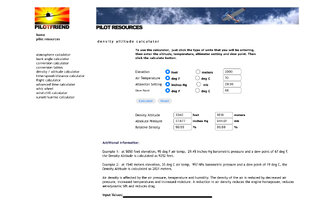
@Neutron asked you above to provide altitude, temp and humidity, those three things combined determine density altitude which greatly affects your engines horsepower output. You can see from the pic below that at 2000’ of elevation with temp, humidity, temp and altimeter your density altitude is 3340’ which is a hp loss of 10%. I don’t know your exact location so I had to take an educated guess as to the specific conditions.

IMG_1520.jpeg

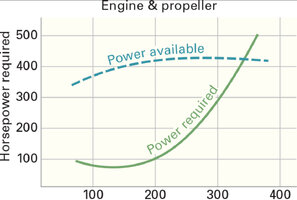
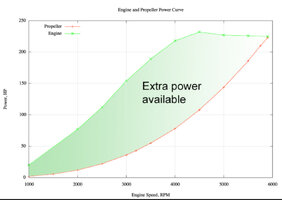
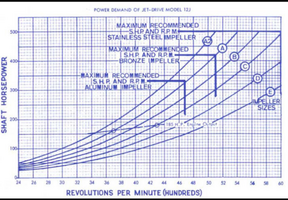
I explained in another thread that there is an available power / reserve power and jet pump demand hp curve. Where the two lines meet is going to be the maximum rpm of what your engines will turn

IMG_1398.jpeg

IMG_1397.jpeg

Your engines do not make peak hp until they reach 8000 rpm, at 7200 rpm your engines are producing less power and thus the sooner the available power and jet pump demand power meet which results in less water velocity and volume being produced which equals less boat performance.

As you can see from this Berkeley jet graph the demand power is not linear, it increases logarithmically, so again, it is vital that you get your engines up to 8000 rpm and the only way to get there is to reduce the demand of the jet pump by reducing the pitch of the impellers.

IMG_1399.png

Your boats engines output is 111 hp each at sea level under standard atmospheric conditions, and the jet pump demand is designed for those conditions. Since your boat is at higher elevation you have to change the design of the jet pump demand by reducing the pitch of the impellers. There is no greater performance enhancement you can do to your boats performance than having a set of tuned impellers for your boat that are set up for the altitude that you are boating at. Also, the impellers need to have a slightly different pitch between the port and starboard side due to engines spinning the same direction, with the impellers tuned to each side of the boat the loading is the same on each engine and this also increases performance.

I can attest to this as I have done a lot of impeller testing for my operating conditions which are mainly at 5000’-1250’. I was running my oem pitch impellers at 1250’ this last week under some pretty warm conditions and was getting right around 7500 rpm. Those same impellers at 500’ in cooler (65*) temps produce just under 8000 rpm. My high altitude impellers give me roughly 7300 rpm at 5000’, and at 600’ I easily get 8000 rpm, but at 600’ I have a lot of reserve power as I am under propped, this results in my boat having some really great performance in terms of driving through corners and lower acceleration times, the performance was exhilarating. Top speed is very close to what the oem pitch impellers are, the trade off is a bit more fuel consumption, .3-.5 mpg, as the engines are spinning faster with the HA impellers to pump the same amount of water as the OEM pitch but the trade off is well worth it.
 
Last edited:
Wow lots of great info to chew on FSH210! Yeah, I know it’s tuff to diag without a true baseline, but in my defense the first time out I just getting an understanding of the boat so who knows what original RPM was. I will take a few minutes and gap to .28 prior to my next outing.

With elevation at 2000 temp at 70-80 and 55% humidity your guess at my conditions were spot on, so I’ll always have that 10% loss. Like I said I’m super happy with the improvement from just these general maintenance items. I’m also super impressed by low speed performance, it pops out of the hole faster than anything I’ve been on and if I had to trade that for little MPH gain I wouldn’t.

I’ll reach out to leading edge, if a loss in MPG is the only disadvantage I’m only worried about SPG (smiles per gallon) 😉
 
Wow lots of great info to chew on FSH210! Yeah, I know it’s tuff to diag without a true baseline, but in my defense the first time out I just getting an understanding of the boat so who knows what original RPM was. I will take a few minutes and gap to .28 prior to my next outing.

With elevation at 2000 temp at 70-80 and 55% humidity your guess at my conditions were spot on, so I’ll always have that 10% loss. Like I said I’m super happy with the improvement from just these general maintenance items. I’m also super impressed by low speed performance, it pops out of the hole faster than anything I’ve been on and if I had to trade that for little MPH gain I wouldn’t.

I’ll reach out to leading edge, if a loss in MPG is the only disadvantage I’m only worried about SPG (smiles per gallon) 😉

Right on….
I’d leave the plugs alone, the gasket is a single use type, I’m sure it will be fine for the time being, just keep the .028” gap in mind when you change plugs next.

As far as impellers go, if you can swing it, just get another set of impellers and have them pitched and install them, that way you will have a back up set if something goes wrong, and, just in case you need to send them back to have the pitch adjusted a little more your boat is not down waiting the impellers to come back.

Something to keep in mind, hammering the throttles from a dead stop to WFO can produce some cavitation, it’s also not realistic to drop the hammer like that. You can get really hard acceleration by just pushing the throttles up quickly as opposed to just slamming them forward. The amount of power you’ll have to drive through corners will be greatly increased, and if you are going to tow people on a tube the power increase will be very noticeable as well.
 
7600 starboard, 7800 port for rpm's, which is consistent with performance since new

If it makes you feel any better, I had a Starboard idiot light and warning, from test fire on land, first fire off the trailer, and through 2 more complete cycles.

Pulled it to the pier, and started to go through diagnosis, remembered that I had ingested a piece of wood at the end of last year for our final run, for my niece's proposal, and hadn't run it since then

Oil, good, air filter, good, everything fired up, so plugs weren't suspect, but I was still going to check, along with the coils, but like with EVERY CEL due to stoppage or weeds blocking water intake, it cleared after the 5th restart, and it was time to show what elevation and proper oil levels are able to consistently produce for me in those conditions. Glass calm and cooler temps, all else being the same, might get me more, but that's not how I typically use my boat. Searching for more speed isn't my concern, otherwise I'd have gone with a HO model.

That's fully fueled, one other passenger, and about half of the standard cargo I carry. Still need my tools, lines, starter packs, PFD's, anchors, fenders and other BS. Add that temps were cooler at this time, probably around 75-80, so that's pretty decent performance, but 40-ish is average with 1 passenger, and subtract 0.5-1mph per passenger.

I won't take more than 8 out, and that will keep me in the 30-33mph range.

I will say that I don't have my nozzles dialed in at the moment, but I will be working on that after I have some parts come in. My port side nozzle is off, after getting the articulating keel and steering wheel centered.

You might want to check your nozzles as well with a 4-6' level, as well as checking your keel to see if "center" on your steering wheel is actually costing you any speed loss if the keel is off. Mine was, and the plan was to address it at the end of last year, with some other work I had planned, but now is when life granted me the ability to follow through with those plans
 
Back
Top