• Welcome to Jetboaters.net!

    We are delighted you have found your way to the best Jet Boaters Forum on the internet! Please consider Signing Up so that you can enjoy all the features and offers on the forum. We have members with boats from all the major manufacturers including Yamaha, Seadoo, Scarab and Chaparral. We don't email you SPAM, and the site is totally non-commercial. So what's to lose? IT IS FREE!

    Membership allows you to ask questions (no matter how mundane), meet up with other jet boaters, see full images (not just thumbnails), browse the member map and qualifies you for members only discounts offered by vendors who run specials for our members only! (It also gets rid of this banner!)

    free hit counter

How to add a Shutoff Valve to your boat's cooling system

My valves are similar, @Monster77 .

Squirt some WD40 or CRC on those valves. Mine are rusting something awful (after several years, mind you).
 
I don't think the Sea Tow driver knew this equipment as there is NO difference between the 2 and 4 stroke engines with regard to water ingestion on a dead engine above no wake speed. Another nice feature of the tow (isolation) valves is the ability to flush your engines with fresh water while sitting in the salt.
How does that flushing tip work? I just bought a Yamaha 190 FSH which I researched well but never realized until after the purchase that it would not be able to be docked in saltwater. For some reason, it never occurred to me that there would be no way to flush it out so now I am at the whim of the marina to put the boat in and out, and that was not my intention as I like to fish when I want to fish whether it’s four in the morning or four in the afternoon. So I am really interested in what you say about being able to flush salt water out while it’s in the water.
 
@Tylenator run through this thread. You'll see why I'd still suggest this for the issue you were having. My well is an artesian, and puts out less pressure than yours, most likely, so I'm familiar with the problem you were having. This will help, even with the wife taking a shower, as well as help you if you ever need to be towed, or run through some Salt Away. The easiest version is the hose clamps I mentioned, this is a more permanent solution. Another reason to at least look at it when you get your boat back, is to familiarize yourself with where and how to clamp the hose off, in case you need a tow. Better to know, before you go!
 
How does that flushing tip work? I just bought a Yamaha 190 FSH which I researched well but never realized until after the purchase that it would not be able to be docked in saltwater. For some reason, it never occurred to me that there would be no way to flush it out so now I am at the whim of the marina to put the boat in and out, and that was not my intention as I like to fish when I want to fish whether it’s four in the morning or four in the afternoon. So I am really interested in what you say about being able to flush salt water out while it’s in the water.
When you have the tow valve(s) installed you can turn the valve off, then use the flushing port and supply water to the engine, start engine-turn on water-turn off water-turn off engine, and you will flush the salt water out of the engine.

@lazergeek has THE best set up for this.


@Tylenator run through this thread. You'll see why I'd still suggest this for the issue you were having. My well is an artesian, and puts out less pressure than yours, most likely, so I'm familiar with the problem you were having. This will help, even with the wife taking a shower, as well as help you if you ever need to be towed, or run through some Salt Away. The easiest version is the hose clamps I mentioned, this is a more permanent solution. Another reason to at least look at it when you get your boat back, is to familiarize yourself with where and how to clamp the hose off, in case you need a tow. Better to know, before you go!
Yeaaaa dude. This is good stuff. Pretty clever to add a valce. For the time being i have two of those clamps you recommended.
 
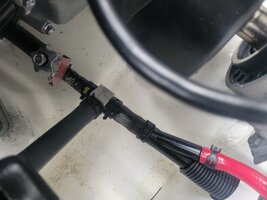
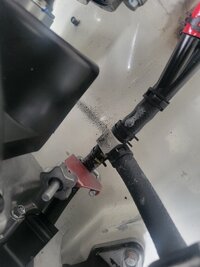
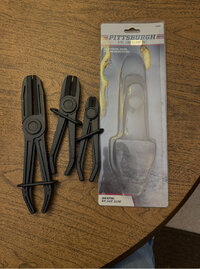
I know this is an old thread and not sure if this is the best place for this post but, I put these pinch valves loosely on the water lines of my almost new 2024 252xe and wanted someone to confirm they're in the correct location (See pics). Didn't look like there was enough room to put them between the Y and the T.

Thought that they could just sit there ready to go if I ever had one engine down or needed to be towed.
 

Attachments

  • 20260410_152953.jpg
    20260410_152953.jpg
    1.1 MB · Views: 14
  • 20260410_152924.jpg
    20260410_152924.jpg
    1.5 MB · Views: 14
I know this is an old thread and not sure if this is the best place for this post but, I put these pinch valves loosely on the water lines of my almost new 2024 252xe and wanted someone to confirm they're in the correct location (See pics). Didn't look like there was enough room to put them between the Y and the T.

Thought that they could just sit there ready to go if I ever had one engine down or needed to be towed.
I like the being prepared idea, however I would not leave those clamps on the lines. Those hoses are soft and to me it looks as if the line is slightly squished.

As far as the location of the clamp, I see what you mean about there being very little room between the wye connector and the T connector, even a thin style clamp may not work there since there is so little hose.

IMG_1188.jpeg


Having said that I’d think you would need to clamp the other line coming off of the T fitting.
 
And... I put full valves behind the wall there down in the bilge. Have never used them. The few times I have been towed, never got close to no wake speed. The few times on one engine, also never got up to no wake before steerage was very difficult. Just my experience and to level-set. Do I regret putting them in? Absolutely not. Might I have changed the order in which I did things? Maybe...
 
Back
Top